Your start-to-finish guide for a personalized luxury diamond


Creating a diamond around someone you love is one of the most intentional acts of remembrance you can make. But without a clear roadmap, the process can feel overwhelming, full of technical jargon, conflicting advice, and decisions that carry emotional weight. This guide walks you through every phase of the custom diamond journey, from clarifying your purpose and understanding quality standards to avoiding costly missteps and verifying your final stone. Whether you’re commemorating a parent, celebrating a milestone, or building a multigenerational heirloom, the decisions you make early will determine whether your diamond truly tells your story.
Table of Contents
Key Takeaways
Point | Details |
Clarify your vision | Define the purpose, sentiment, and personalization goals before you begin the custom diamond process. |
Master the 4Cs | Understanding cut, color, clarity, and carat balances beauty and value in your diamond selection. |
Insist on top grading | Always demand GIA or AGS grading for objective, trusted assessment of your diamond’s quality. |
Document for legacy | Keep thorough records and certifications to secure your gem’s meaning and value through generations. |
Emphasize meaning over metrics | True luxury comes from the story your diamond tells, not just technical perfection. |
Defining your vision: Purpose, sentiment, and personalization
Every extraordinary diamond begins with a question most people skip: Why does this stone exist? Purpose shapes everything. A commemorative diamond for a parent carries different design priorities than one marking a business milestone or anchoring an investment-grade collection. Getting clear on this first saves time, money, and regret later.
Your purpose will also guide your material choice. The three main categories are natural diamonds, lab-grown diamonds, and DNA or memorial diamonds. Natural for rarity/appreciation vs. lab-grown for ethics, cost, and personalization are genuinely contrasting philosophies, and neither is universally right. Natural stones carry geological scarcity and long-term appreciation. Lab-grown and memorial options offer extraordinary personalization, lower price points, and ethical sourcing, which matters to a growing number of collectors.
DNA diamonds are in a category of their own. When you can memorialize loved ones by transforming hair or nail clippings into a finished stone, the diamond stops being a luxury object and becomes a vessel for identity. That shifts the entire emotional register of the piece.
Key considerations when defining your vision:
Purpose: Is this commemorative, celebratory, or an investment piece? Each drives different quality priorities.
Material: Natural, lab-grown, or DNA/memorial? Your ethics, timeline, and emotional intent all factor in.
Who it’s for: A piece worn daily needs different durability planning than a display heirloom.
Longevity: Will this be passed down? If so, documentation and certification matter from day one.
Narrative: What specific story do you want the stone to carry? The more specific, the more meaningful the result.
Pro Tip: Before your first consultation, write two or three sentences describing what this diamond should make the wearer feel when they hold it. Bring that language to every conversation. It will anchor design decisions when technical options start competing for your attention.
The best custom diamonds start from a deeply personal story. Explore approaches to crafting custom gems that carry real meaning before making any material decisions.
With emotional clarity as your anchor, your next step is to understand what goes into making your diamond truly exceptional.
Understanding quality: The 4Cs and grading reports
The 4Cs, cut, color, clarity, and carat weight, are the universal language of diamond quality. Understanding them isn’t just academic. It protects you from overpaying and helps you direct your budget where it creates the most visible impact.
Cut is the most critical factor for brilliance and sparkle. An Excellent or Very Good cut grade transforms light through a stone in ways that no other characteristic can replicate. Two diamonds with identical carat weights and color grades can look dramatically different based on cut alone. This is where your budget should concentrate first.
4C Factor | Priority Level | Recommended Grade | Impact on Value |
Cut | Highest | Excellent / Very Good | Determines visual brilliance |
Color | High | G-H (near-colorless) | 30-50% savings vs. D-F |
Clarity | Medium-High | VS2 to SI1 | Eye-clean, excellent value |
Carat | Flexible | Match to other 3Cs | Weight, not visual quality |
Color grades run from D (colorless) to Z (visible yellow). The G-H range hits what most experts call the sweet spot: near-colorless to the naked eye, but 30-50% less expensive than the D-F colorless tier. For clarity, VS2 to SI1 stones appear flawless to the naked eye while delivering meaningful savings over VS1 and above.
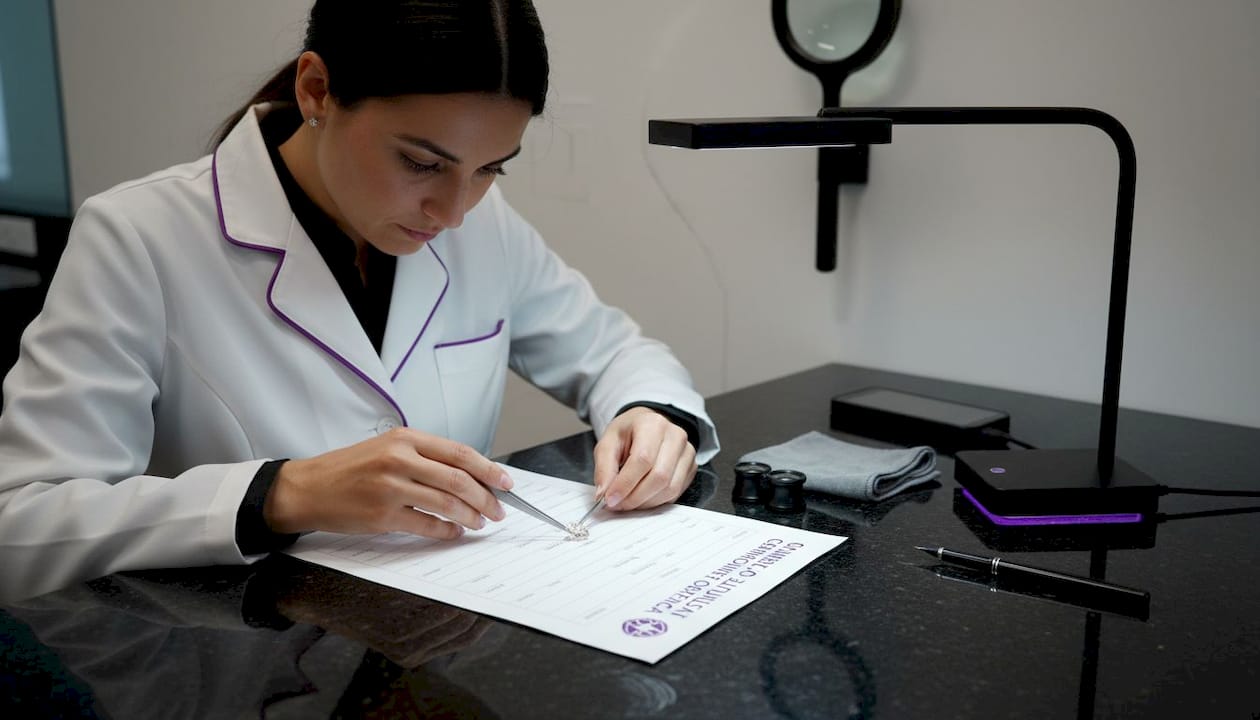
GIA grading reports provide the most trusted objective assessment of the 4Cs. The Gemological Institute of America and the American Gem Society (AGS) are the gold standards. Avoid settling for less recognized lab reports, especially for stones above one carat or memorial diamonds with added sentimental value. Third-party grading from a respected body is your independent verification.
Pro Tip: Ask your jeweler whether their custom stones are submitted for third-party grading before setting, not after. Post-setting assessments are harder to assess accurately, and some graders charge premiums or offer less detailed reports on set stones.
For collectors focused on personalized luxury gems, knowing which grading labs carry weight in resale and estate contexts can significantly affect long-term value.
With quality factors top of mind, you’ll want to know what’s involved in actually crafting your one-of-a-kind diamond.
From idea to stone: The custom diamond creation process
Understanding the full creation journey demystifies the timeline and helps you ask the right questions at every stage. The process differs depending on whether you’re ordering a traditionally custom diamond, a lab-grown stone designed to specification, or a DNA memorial diamond.
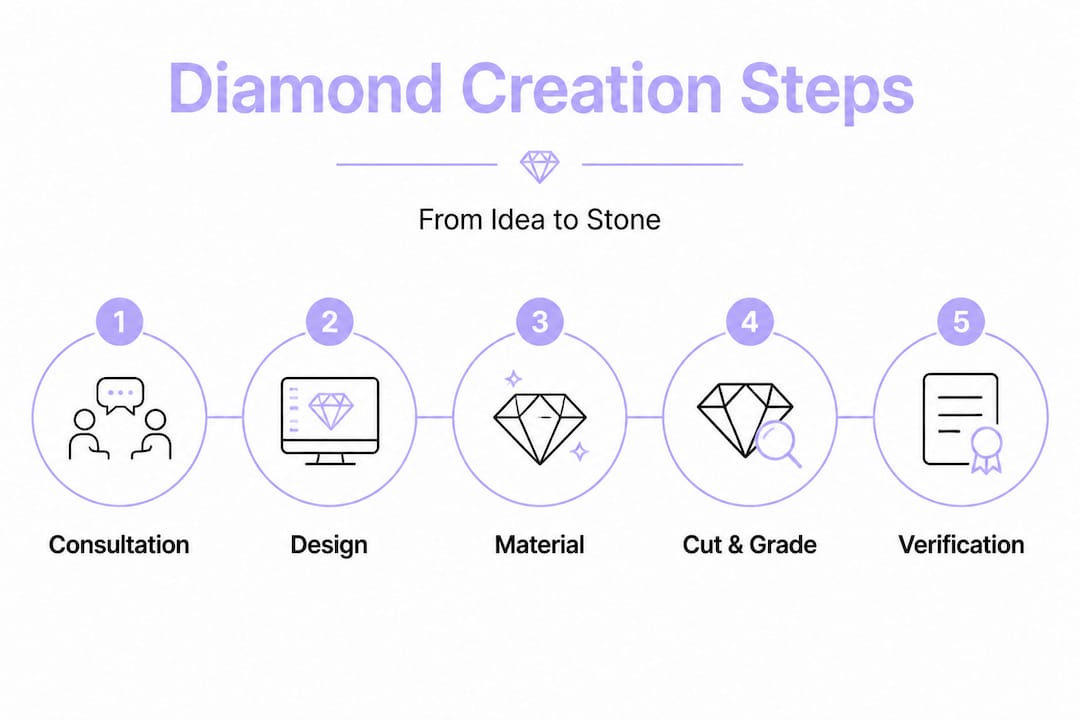
Here’s how the stepwise diamond creation process typically unfolds:
Design consultation: You meet with a specialist to translate your vision into technical specs. Shape, size, color target, and setting style all get defined here.
Material sourcing: For natural diamonds, this involves selecting from existing inventory or commissioning a specific rough stone. For lab-grown and memorial stones, material is prepared at this stage.
Diamond growth or selection: Lab-grown and DNA diamonds undergo a growth phase using either HPHT (high pressure, high temperature) or CVD (chemical vapor deposition) technology. DNA material is infused into the diamond structure at this step.
Cutting and polishing: A master cutter shapes the rough stone to maximize brilliance. This is where cut grade is determined and where inexperienced cutters lose value.
Grading: The finished loose stone is submitted to a recognized lab for independent 4Cs assessment.
Setting and delivery: The graded stone is set in your chosen metal and style, then inspected before delivery.
Stage | Typical Duration | Your Involvement |
Design consultation | 1 to 2 sessions | High |
Material sourcing | 1 to 4 weeks | Low to medium |
Diamond growth (lab/memorial) | 6 to 10 weeks | None |
Cutting and polishing | 2 to 4 weeks | Low |
Grading and certification | 2 to 4 weeks | None |
Setting and delivery | 1 to 3 weeks | High (approval) |
The personalized memorial gem process adds one significant distinction: the DNA extraction and preparation phase. Hair or nail material is processed to extract carbon, which becomes the base element of the stone. This is what makes memorial diamonds chemically and narratively unique. It isn’t symbolic. The actual carbon from your loved one becomes part of the crystal structure.
Pro Tip: During the design consultation, ask for a written scope document that includes estimated timelines for each stage. Any reputable jeweler will provide this. It protects both parties and keeps the project grounded when emotions run high.
Now that you understand the crafting process, avoid the most common pitfalls with practical, expert-backed advice.
Expert pitfalls to avoid and best practices
Most expensive mistakes in custom diamond projects happen at the beginning, not the end. They’re the result of decisions made without enough information or from vendors who were better at selling than at guiding.
Common pitfalls that derail custom diamond projects:
Chasing invisible upgrades: Paying for D-color or Flawless clarity in stones under one carat rarely produces visible results. Prioritizing cut over size consistently outperforms spending on imperceptible color or clarity premiums.
Choosing vendors based on price alone: The cheapest quote rarely accounts for the quality of cutting, the rigor of grading, or the craftsmanship of setting.
Over-customizing for personal taste: Extremely unusual shapes, non-standard cuts, or niche color treatments can reduce future marketability or make the piece harder to reset.
Skipping documentation: No paper trail means no verifiable legacy. Keep every certificate, appraisal, and provenance record from the start.
Rushing timelines: Memorial diamonds in particular require time. Compressing the schedule introduces risk at the cutting and grading stages.
“The most meaningful diamond we ever commissioned took nine months from first conversation to delivery. Every week felt purposeful. Rushed timelines and custom diamonds are incompatible.”
When evaluating jewelers, ask specifically about their grading partnerships, their cutting standards, and whether they can share examples of similar memorial or custom projects. Personalizing luxury with DNA gems requires a different set of technical competencies than traditional custom work, and not every jeweler has them.
Reviewing diamond personalization examples from past clients also helps set realistic expectations for finish quality and timelines.
Pro Tip: Request a “hold and review” clause in your contract before the stone is set. This gives you a window to inspect the graded loose stone and confirm it matches your specifications before it’s permanently mounted.
With these lessons in mind, it’s time to consider final verification, ensuring the value and meaning you intended.
Final verification: Authenticity, legacy, and peace of mind
The grading report you receive at the end of this process is more than a piece of paper. It’s the verifiable record of what you created and why it matters. GIA reports provide objective 4Cs assessment and are widely recognized in estate planning, insurance, and resale contexts. Keep both physical and electronic copies stored separately.
For memorial diamonds, documentation carries a second layer of significance. The following steps protect both financial and emotional value:
Register the grading report with the issuing lab (GIA and AGS both offer online registration).
Commission a formal appraisal from an independent appraiser, not the selling jeweler, for insurance purposes.
Include the stone in your estate planning documents with a narrative description of its origin and significance.
Photograph the stone before and after setting from multiple angles under different lighting.
Have a direct conversation with intended heirs about the memorial diamond’s story and your wishes for its future.
The question of legacy is one most people defer until it’s too late. A memorial diamond without documentation is just a diamond. With documentation, it becomes a named artifact connected to a person, a date, and a story. That’s what makes personalized luxury with DNA categorically different from every other form of fine jewelry.
Statistically, estate disputes over jewelry are most commonly triggered by ambiguity, who owns it, what it’s worth, and what it meant. A simple letter of intent kept with the grading report and estate documents eliminates most of that ambiguity.
With a verified, meaningful diamond, let’s reflect on the deeper lessons this journey reveals.
The uncomfortable truth about custom diamonds: Meaning over metrics
Here’s what decades of working in this space makes clear: the clients who are most satisfied with their custom diamonds are almost never the ones who optimized hardest for specs. They’re the ones who stayed connected to why they started.
The 4Cs are real. Cut quality matters. GIA reports matter. But families don’t gather around an estate table to discuss whether the stone was D or G color. They talk about the person it represents, the moment it was given, and what was said when the box was opened. Those are the metrics that endure.
The conventional wisdom in fine jewelry is that technical quality is the foundation of lasting value. That’s partially true. But for memorial and commemorative pieces, the irreplaceable value lies in narrative, not numbers. A well-cut, well-graded diamond can be sourced anywhere. A stone grown from your mother’s hair, set in a design that references her favorite garden, given on the anniversary of her life, cannot be replicated at any price.
This reframes the entire buying process. Instead of asking “Am I getting the best diamond for my budget?” the better question is “Does this stone carry the full weight of what I’m trying to say?” The answer has very little to do with carat weight.
We’ve found that clients who articulate their narrative clearly before any technical conversation produce the most exceptional results. Not because the specifications don’t matter, but because purpose calibrates every decision that follows. Check out the inspiration for memorial diamonds that have moved people to commission stones that no catalog could ever offer.
A beautiful diamond can be replaced. A story-driven one cannot. That’s the real foundation of lasting value.
Bring your unique diamond vision to life
You now have the framework. Every stage from defining your purpose to verifying your stone is mapped. The real question is whether you want to navigate it alone or alongside a specialist who does this every day.
At Shinlabz, we specialize in infusing DNA extracted from hair or nails directly into a finished diamond, and the entire process takes just two hours of your time. Our memorial and luxury diamond services are built for clients who want complete transparency, expert guidance, and a result that carries genuine personal meaning. Whether you’re drawn to our memorial brilliance diamond, the deeply personal shine of remembrance diamond, or a fully bespoke piece through our custom jewelry design service, every consultation starts with your story. Book a one-on-one with our team and bring what you’ve learned here to that first conversation.
Frequently asked questions
What is the most important factor in custom diamond quality?
Cut quality is most critical for sparkle and visual impact. Always prioritize an Excellent or Very Good cut grade before adjusting carat weight or color.
Are lab-grown diamonds as valuable for memorial keepsakes?
Lab-grown diamonds offer ethical, highly customizable, and more affordable alternatives to natural stones, making them ideal for personalized memorial gems where emotional meaning outweighs geological scarcity.
Why do GIA and AGS reports matter for custom diamonds?
GIA reports provide objective grading that protects your investment in resale and estate contexts, ensuring no one can dispute what your stone is and what it’s worth.
How long does it take to create a custom diamond from start to finish?
Standard custom diamonds typically take three to six months. DNA memorial diamonds run six to twelve months depending on design complexity, grading scheduling, and setting work.
Can I include personal elements like DNA or heirloom material in my diamond?
Yes. Specialized services can extract carbon from hair or nail clippings and grow it into a certified diamond, creating a one-of-a-kind memorial stone that is chemically and emotionally inseparable from the person it honors.
Recommended
Comments