Understanding Life Diamonds: Meaning, Creation, and Value

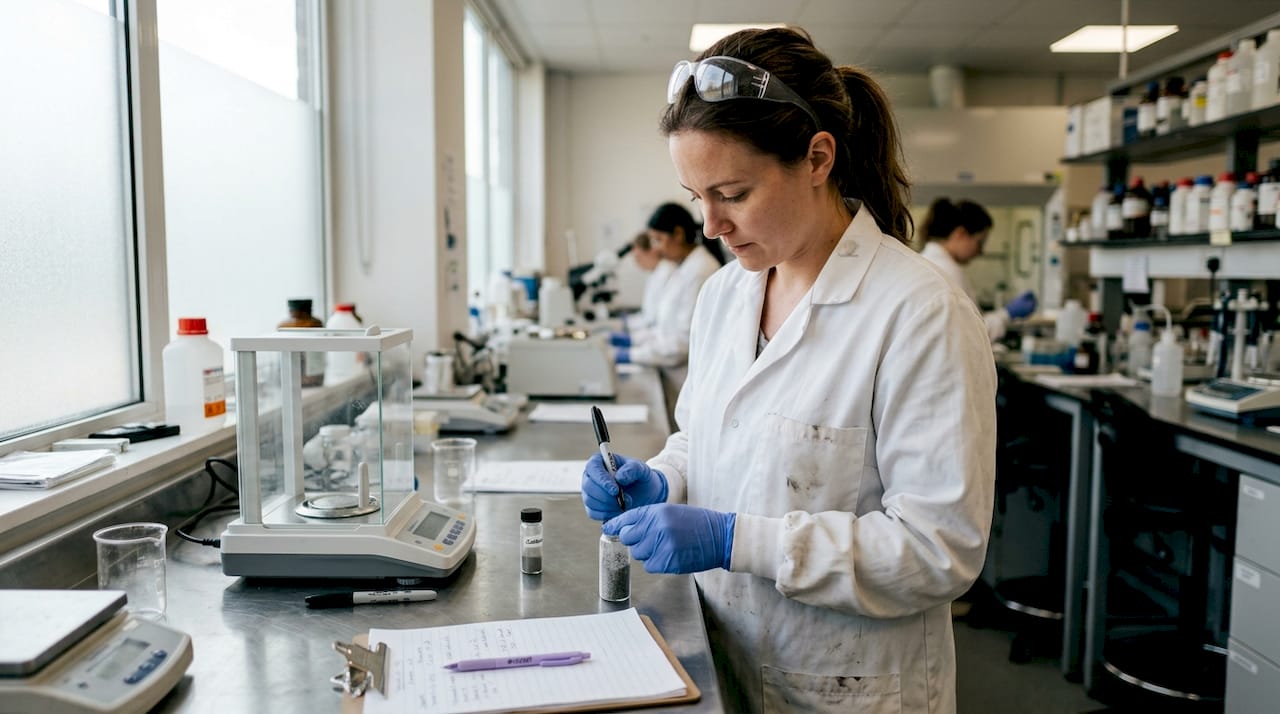
Not every diamond begins deep in the earth. Some start with a strand of hair, a clipped nail, or a small amount of ash. Life diamonds are lab-grown gems created from human DNA or cremated remains, and they carry something no mined stone ever could: a direct biological connection to a specific person. Whether you want to memorialize someone you’ve lost or create a lasting symbol of your own story, understanding how life diamonds work, what they cost emotionally and financially, and how to personalize one will help you decide if this is the right choice for you.
Table of Contents
Key Takeaways
Point | Details |
Life diamonds defined | Life diamonds are personal gems made from human DNA or ashes, offering unique emotional value. |
Transparent creation process | Each diamond is created with verified traceability and safeguards that prevent any mixing of remains. |
Ethical and eco-friendly | Life diamonds are considered environmentally responsible and do not involve conflict mining. |
Meaning over market value | The true worth of a life diamond is personal and sentimental, not based on resale price. |
Wide personalization options | Choose from colors, shapes, and settings to create a truly custom memorial or gift. |
What are life diamonds?
A life diamond is a real, certified diamond grown in a laboratory using carbon extracted from a person’s DNA or ashes. It is not a synthetic imitation. It is not a glass replica. It is chemically and physically identical to a mined diamond, with the same hardness, brilliance, and crystal structure. The only difference is its origin: it begins with something profoundly personal.
Life diamonds can be made from an individual’s DNA or ashes, providing a deeply personal keepsake. That distinction matters. When you hold a life diamond, you are holding a physical transformation of something that once belonged to a living person.
People choose life diamonds for many reasons:
Memorial purposes: Turning the ashes of a parent, spouse, or pet into a wearable gem
Celebration of life: Creating a diamond from your own DNA as a self-empowerment symbol
Unique gifting: Offering a one-of-a-kind piece to someone who means everything to you
Legacy preservation: Keeping a biological connection to a loved one across generations
The emotional weight behind these choices is hard to overstate. Grief is complicated, and many people find that having a tangible, beautiful object helps them process loss in a way that urns or photographs simply cannot. There is something grounding about wearing a piece of jewelry that carries a real biological trace of someone you loved.
“A life diamond is not just a stone. It is a story compressed into crystal form, something you can carry with you every single day.”
For those exploring honoring loved ones with life diamonds, the appeal goes beyond aesthetics. It is about continuity. It is about refusing to let a connection disappear. The Shineternity blog offers a wide range of perspectives from families who have walked this path and found comfort in the process.
How life diamonds are created: The science explained
The process of turning DNA or ashes into a diamond is more straightforward than most people expect. Here is how it works, step by step:
Sample collection: You provide a small amount of biological material, such as hair, nail clippings, or cremated remains. This is the source of the carbon that will become your diamond.
Carbon extraction: The lab isolates and purifies the carbon from your sample. Everything else is removed, leaving only the elemental building block of the diamond.
High-pressure, high-temperature growth: The purified carbon is placed in a specialized chamber that replicates the extreme conditions deep within the earth. Over weeks or months, the carbon atoms arrange themselves into a diamond crystal.
Cutting and certification: Once the rough diamond is grown, it is cut, polished, and certified by a gemological authority. You receive documentation confirming the stone’s origin and characteristics.
Individual processing prevents any mixing and traceability is maintained through documents and IDs. That is a critical detail. Reputable providers assign a unique identifier to your sample from the moment it arrives, ensuring that the diamond you receive is made exclusively from your material.
Pro Tip: Before committing to a provider, ask directly how they track individual samples throughout the process. A trustworthy lab will have a clear, documented answer. If they are vague, look elsewhere.
Step | Life diamond | Mined diamond | Standard lab-grown |
Source material | DNA or ashes | Earth’s mantle | Generic carbon |
Personal connection | Yes, biological | None | None |
Traceability | Individual ID | Mine of origin | Batch tracking |
Certification | Yes | Yes | Yes |
Timeline | Weeks to months | Millions of years | Weeks |
Understanding the transformation process helps you appreciate why life diamonds feel different from any other gem. The science is real. The connection is real. And the result is a stone that could not exist without the specific person it came from.
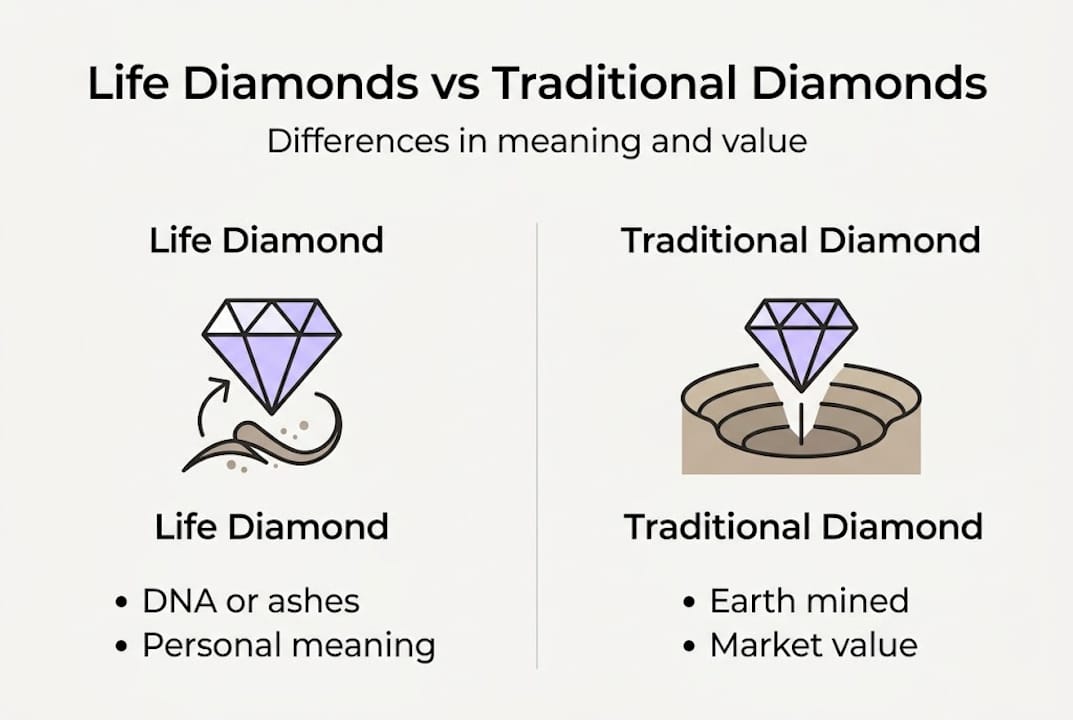
Life diamonds vs traditional diamonds: Meaning, value, and ethics
When people compare life diamonds to mined or standard lab-grown options, they often focus on price. That is understandable, but it misses the bigger picture.
Factor | Life diamond | Mined diamond | Standard lab-grown |
Emotional value | Extremely high | Variable | Low to moderate |
Environmental impact | Minimal | Significant | Low |
Ethical sourcing | Guaranteed | Varies | Generally yes |
Resale value | Low | Moderate to high | Low |
Personalization | Biological origin | None | Limited |
Life diamonds are considered conflict-free and eco-friendly compared to mining, but some see them as expensive lab-grown options with lower resale value. That last part is worth addressing directly.
Key ethical differences worth knowing:
Mined diamonds can carry a complicated supply chain, including environmental destruction and labor concerns in certain regions
Life diamonds use no new mining and leave a minimal ecological footprint
Standard lab-grown diamonds are also ethical but lack the personal biological connection
Life diamonds are guaranteed to be conflict-free by design, since they originate from a private individual
“Meaning is personal. A diamond’s worth is not always measured in carats or resale price. Sometimes it is measured in what it represents to the person wearing it.”
One common misconception is that a life diamond should hold its financial value like a rare mined stone. It will not. If you are buying a life diamond as an investment, you are approaching it from the wrong angle entirely. But if you are creating something to honor a life, celebrate a connection, or carry a memory forward, the future of memorial innovations shows that more and more people are finding that worth every dollar spent.
How to choose and personalize your life diamond
Choosing a life diamond provider is one of the most important decisions in this process. Not all labs operate with the same standards, and the emotional stakes are high.
Ask these questions before committing:
How do you track and document each individual sample?
What certifications do your finished diamonds receive?
Can I choose the size, color, and cut of the final stone?
What happens if something goes wrong during processing?
Do you offer a consultation before I send my sample?
Once you have chosen a trusted provider, the personalization options are genuinely exciting. You can typically select:
Diamond color: From classic white to blue, yellow, or even pink, depending on trace elements introduced during growth
Cut and shape: Round brilliant, princess, oval, cushion, and more
Setting and jewelry type: Ring, pendant, bracelet, or loose stone
Engravings: Names, dates, or short phrases inscribed on the band or setting
The sentimental value of a life diamond can be extremely high for some, though resale value tends to be low. Knowing this going in protects you from disappointment later. You are not buying an asset. You are commissioning a memory.

Pro Tip: Prioritize emotional clarity over cost optimization. Decide what this diamond means to you before you start comparing prices. That intention will guide every other decision, from the size of the stone to the style of the setting.
Common pitfalls to avoid:
Expecting financial returns similar to mined diamonds
Choosing a provider based on price alone without verifying their traceability process
Rushing the decision during a period of acute grief
Exploring custom jewelry options can help you visualize the full range of what is possible, and unlocking memory power through thoughtful design choices makes the final piece even more meaningful.
A fresh perspective: Why the real value of life diamonds is personal, not financial
Most critics of life diamonds zero in on resale value and walk away shaking their heads. They are asking the wrong question entirely. You would not evaluate a wedding ring by how much you could sell it for after a divorce. You would not price a child’s first drawing. Some objects exist outside the logic of markets.
Life diamonds belong in that category. They are not luxury goods competing with mined stones. They are tangible memories, compressed into something you can wear. The emotional value of ashes to diamonds is something that traditional gemology has no framework to measure, and that is exactly the point.
What we have seen, working closely with people who choose this path, is that the act of creating a life diamond is itself part of the healing or celebration. It is intentional. It is personal. And it produces something that no jewelry store in the world can replicate. That is not a marketing claim. That is a lived reality for the people who choose it.
Explore life diamonds with Shineternity
If this article has sparked something in you, whether it is curiosity, a desire to memorialize someone, or the idea of creating something entirely your own, Shineternity is here to help you take that next step.
At Shineternity, we specialize in turning DNA from hair or nail clippings into a certified, finished diamond in as little as two hours. Our process is transparent, individually tracked, and designed to honor the person behind every stone. Explore our custom jewelry design options, browse our Immortalize Brilliance Diamond collection, or learn more about our Immortalize Diamond service. Every diamond we create is as unique as the person it comes from.
Frequently asked questions
How long does it take to create a life diamond?
It typically takes 5 to 12 months from sample collection to a certified finished stone, though timelines depend on individual processing steps and laboratory capacity. Always confirm expected timelines with your provider upfront.
Can I customize the color and shape of my life diamond?
Yes. Personalization options are a key benefit of memorial lab-grown diamonds, including color selection, cut shape, engraving, and your choice of setting or jewelry style.
Are life diamonds considered eco-friendly?
Life diamonds are conflict-free and considered eco-friendly because they require no mining and leave a significantly smaller environmental footprint than traditionally extracted stones.
Will a life diamond retain its resale value?
Resale value is typically low because some view life diamonds as expensive lab options rather than investment assets. Their true worth is sentimental, not financial.
Recommended
Comments