Symbolic diamonds: How your DNA becomes a lasting gem


There is a quiet revolution happening in the world of fine jewelry. You no longer have to source a diamond from a mine deep underground or settle for a generic stone with no connection to your story. Today, a strand of your hair or a clipping from your nail can be transformed into a certified, brilliant diamond that is entirely, undeniably yours. Companies like Solo for Diamonds and Saint Diamonds are leading this movement, proving that the most meaningful gems are not found but created from something deeply personal.
Table of Contents
Key Takeaways
Point | Details |
Unique from DNA | Symbolic diamonds are created from DNA, offering unmatched personalization beyond standard gems. |
Science and sentiment | The process combines advanced technology and deep emotional significance for lasting memorials. |
Customizable results | Buyers can personalize their stone’s color, cut, and even symbolic meaning for special occasions. |
Family legacy | Symbolic diamonds help create meaningful family heirlooms and personal keepsakes. |
What are symbolic diamonds?
A symbolic diamond is not just a diamond with a story attached to it. It is a diamond grown from carbon extracted directly from your DNA, making it a physical extension of a living person, a beloved pet, or someone who has passed. The result is a stone that carries the same chemical structure as any mined diamond but holds a layer of personal meaning that no earth-sourced gem could ever replicate.
Here is how symbolic diamonds stand apart from the two other main categories:
Natural diamonds form over billions of years under extreme geological pressure. They are beautiful, but they belong to the earth, not to you.
Standard lab-grown diamonds are created using industrial carbon in controlled conditions. They are sustainable and affordable, but they have no personal origin.
Symbolic diamonds use carbon derived from your own biological material. Every facet literally comes from you, making them a personalized luxury gem unlike anything else available.
People choose symbolic diamonds for deeply personal reasons. Some want to memorialize a family member or a pet. Others use them to mark a milestone, like a birth, a wedding, or a major life transformation. Many simply want a piece of jewelry that tells their story with absolute authenticity.
“The most powerful thing about a symbolic diamond is not its sparkle. It is the fact that no one else on the planet owns the same stone.”
Established companies like Solo for Diamonds and Saint Diamonds provide this service with an emphasis on individual processing, meaning your sample is never mixed with anyone else’s material. This commitment to separation is what gives each stone its genuine uniqueness. The growing interest in diamonds and emotional meaning shows that buyers increasingly want more than beauty from their jewelry. They want connection.
How DNA is turned into a diamond: The step-by-step process
Understanding the process removes all the mystery and makes it even more astonishing. Here is exactly what happens from the moment you submit a sample to the moment you hold your finished gem.
Sample collection. Hair or nail clippings are the most common sources. A small amount is enough. The sample is sealed, labeled, and tracked individually throughout the entire process to ensure no cross-contamination.
DNA extraction. The biological material is processed to isolate and extract the DNA. This is where the unique molecular blueprint of the individual becomes the foundation of the diamond.
Carbon purification. The extracted material is purified to concentrate pure carbon. Any non-carbon elements are removed. This carbon is the only building block needed to grow a diamond.
Diamond synthesis. Using a high-pressure, high-temperature (HPHT) or chemical vapor deposition (CVD) method, the purified carbon is placed in a growth chamber. Under conditions that replicate those deep within the earth, carbon atoms bond together in the same crystalline structure as a natural diamond.
Cutting and polishing. Once the rough diamond crystal has grown, skilled cutters shape it into your chosen form, whether round brilliant, oval, cushion, or another style. Polishing reveals the final brilliance and fire of the stone.
Certification and delivery. The finished stone is certified and delivered with documentation confirming its origin and specifications.
Individual processing throughout each step is what makes each gem truly unique rather than a product off a generic assembly line.
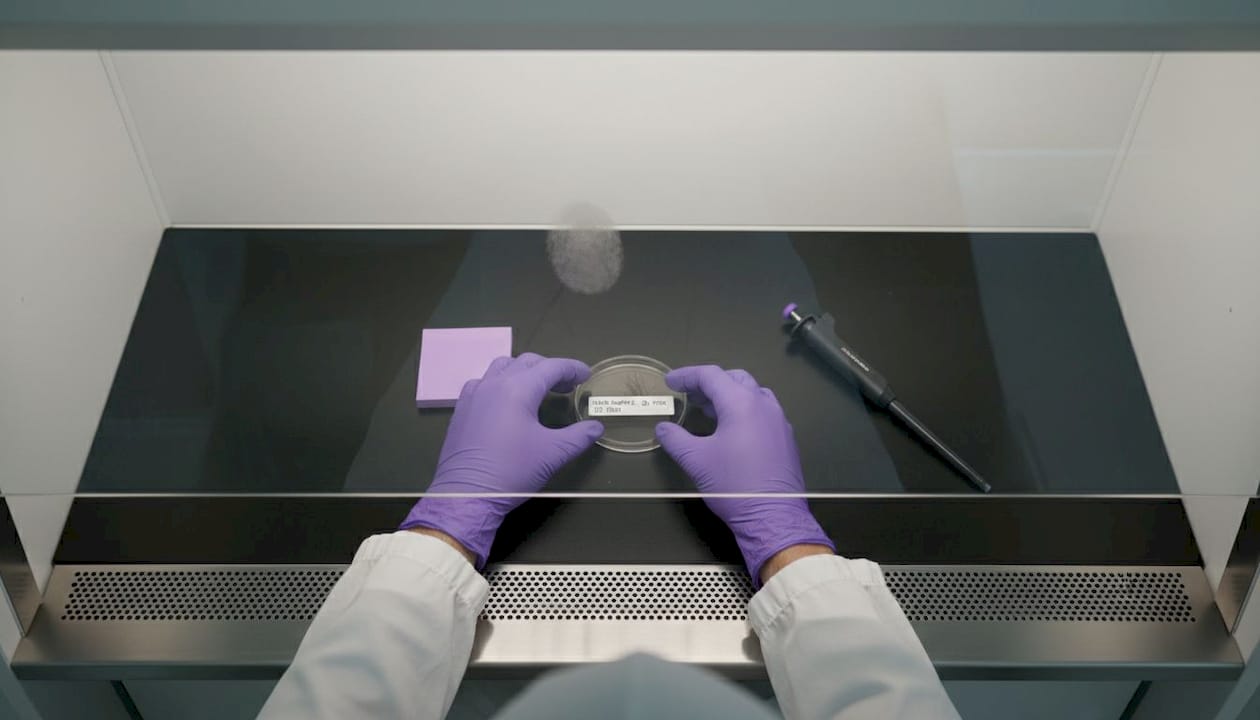
Step | Material involved | Key outcome |
Sample collection | Hair or nails | Unique biological source locked in |
Carbon extraction | DNA from sample | Personal carbon isolated |
Diamond synthesis | Purified carbon | Crystal structure formed |
Cutting and polishing | Rough diamond | Shape and brilliance revealed |
Certification | Finished gem | Authenticity confirmed |
Pro Tip: Keep your sample material stored in a clean, dry container before submission. Contamination from oils or cleaning products can affect the extraction process. A plain paper envelope works better than a plastic bag for hair samples.
For a deeper look at the science and sentiment behind this process, the personalized memorial gem creation guide covers what to expect at every stage. If you want to follow the process chronologically, the step-by-step memorial diamond process resource walks you through each phase in detail.
Comparing symbolic, lab-grown, and natural diamonds
The decision to invest in a symbolic diamond becomes clearer when you lay it next to the alternatives. Each type of diamond serves a different purpose and appeals to a different buyer.
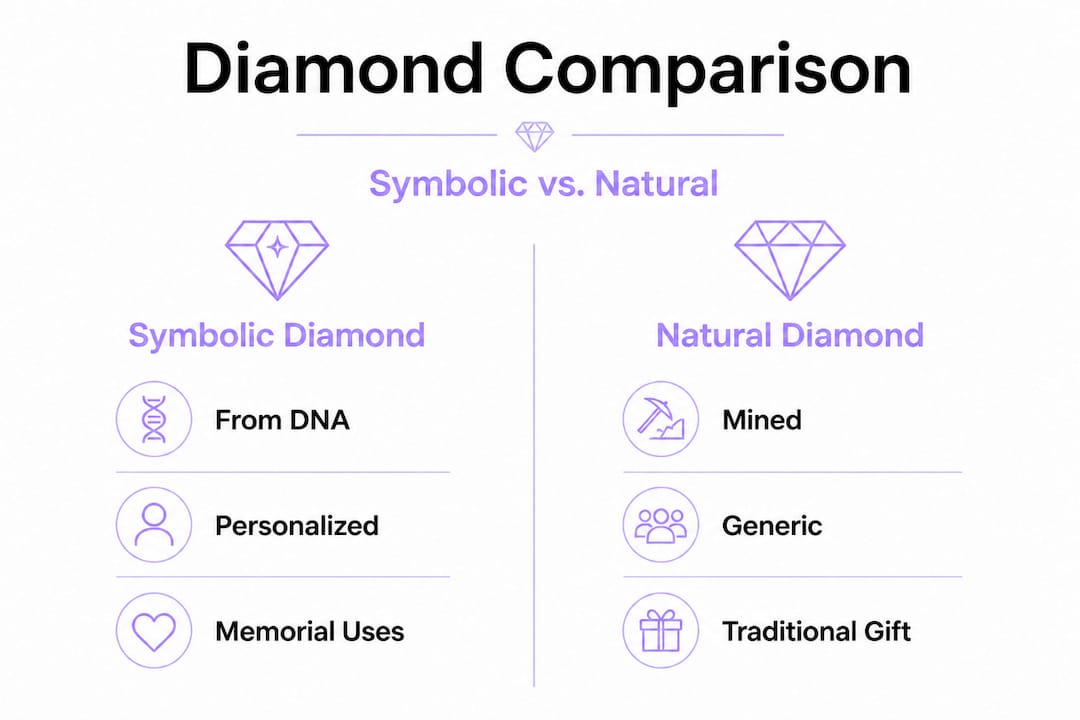
Feature | Symbolic diamond | Lab-grown diamond | Natural diamond |
Origin | Personal DNA | Industrial carbon | Earth’s mantle |
Personalization | Fully personalized | None | None |
Environmental impact | Low | Low to moderate | High |
Emotional connection | Extremely high | Low | Moderate |
Price range | Premium | Affordable | Wide range |
Availability | Made to order | Mass produced | Market dependent |
A few myths are worth addressing directly:
“Symbolic diamonds are not real diamonds.” False. They share the exact same chemical composition (carbon crystallized in a cubic structure) as any mined stone. A gemologist cannot tell the difference under a loupe.
“The quality must be lower.” Not true. Quality depends on the growth conditions and the skill of the cutter, not the origin of the carbon. Many symbolic diamonds achieve excellent clarity and color grades.
“You need a large sample.” Incorrect. A few strands of hair or a small nail clipping contain more than enough material to extract sufficient carbon.
Solo for Diamonds and Saint Diamonds emphasize that the personalization available through symbolic diamonds simply cannot be replicated by any other diamond type. That claim is hard to argue with. When you look at the branded diamonds luxury guide, it becomes clear that the most forward-thinking jewelry collectors are moving away from generic prestige and toward stones with a unique, traceable identity.
The market is responding. Interest in personalized and memorial jewelry has grown significantly over the past decade, driven by buyers who want emotional authenticity alongside aesthetic quality. Symbolic diamonds sit at the intersection of those two demands perfectly.
Why choose a symbolic diamond? Use cases and inspiration
The practical question is always the same: why would someone actually get a symbolic diamond made? The answer varies widely, and that variety is part of what makes the category so compelling.
Memorial diamonds offer a new way to honor loved ones or mark transformative life milestones in a way that is tangible, wearable, and permanent. Here are some of the most meaningful use cases:
Honoring a person who has passed. A parent, grandparent, or close friend can live on in a gem that a family member wears every day. Unlike a framed photo, this memorial travels with you.
Commemorating a beloved pet. Pets are family. Creating a diamond from a pet’s fur or nail gives that bond a form that outlasts memory.
Celebrating a new life. Some parents create a diamond from a baby’s hair collected at birth, capturing that first chapter of a child’s life in something that will last forever.
Wedding and anniversary milestones. Couples are choosing symbolic diamonds as engagement stones, using samples from both partners to create a gem that is genuinely built from both of them.
Personal legacy and identity. Artists, writers, and visionaries are using symbolic diamonds as a radical act of self-expression, creating something that is literally an extension of who they are.
For inspiration on personalizing these concepts, the guide on memorializing loved ones with diamonds offers creative directions. If you are thinking about gifting, the ideas in personalized diamond gifting cover occasions and presentation styles that make the gesture even more powerful. For those who want to fully explore how to craft custom gems with meaning, there are practical tips on choosing cuts, colors, and settings that amplify personal significance.
Pro Tip: If you are creating a symbolic diamond as a gift, consider writing a short letter that describes the story behind the gem. The physical stone is the gift, but the story is what makes someone cry the good kind of tears.
The emotional resonance here goes far beyond aesthetics. A diamond bought from a showcase is beautiful. A diamond grown from your grandmother’s hair is irreplaceable. That distinction matters more to people than almost anything else a piece of jewelry can offer.
What most people miss about symbolic diamonds
Here is an honest observation after working closely with people who commission symbolic diamonds: the most common misconception is that these gems are primarily for grief. People assume that if you want a diamond from DNA, you must be memorializing someone who died. That framing is both limiting and a little unfair to the full range of what symbolic diamonds represent.
The deeper truth is that symbolic diamonds are about identity, memory, and creative self-expression. They are for the living just as much as for those who have passed. A person who creates a diamond from their own hair is not mourning anything. They are making a statement about permanence and self-worth that no other object can make.
There is also a potential for new family traditions that most people have not considered. Imagine a family that creates a symbolic diamond from each new baby born into the lineage. In three generations, that family has a collection of stones, each one a chapter in their shared story. That is not jewelry. That is a living archive. Exploring unique ways to memorialize with diamonds can open doors that most buyers never knew existed.
Practical considerations matter too. Symbolic diamonds cost more than standard lab-grown stones, and the process takes time. Setting realistic expectations about both budget and timeline is essential. Personalization also has boundaries. You cannot change the laws of physics. But within those boundaries, the creative latitude is genuinely wide.
The uncomfortable truth is this: most jewelry is interchangeable. Symbolic diamonds are not. If you are serious about owning something that no amount of money can duplicate once a specific person is gone, the window for creating it is open right now.
How to turn inspiration into your own symbolic diamond
If reading this guide has stirred something, that feeling is worth acting on sooner rather than later.
At Shineternity, the process of turning a DNA sample into a finished diamond takes as little as two hours for the initial steps, with the full journey handled carefully and personally from first consultation to final delivery. Whether you are drawn to this for a memorial, a milestone, or simply the desire to own something genuinely one of a kind, the custom jewelry design service is built to turn that vision into reality. The team guides you through every decision, from sample submission to stone shape to setting style, so nothing gets lost in translation. Ready to start? Book a design consultation and bring your story into permanent, brilliant form.
Frequently asked questions
How is a memorial diamond made from DNA?
A small DNA sample is purified, converted into carbon, and grown into a diamond under high-pressure lab conditions. As memorial diamond pioneers demonstrate, each sample is processed individually to preserve its unique origin.
Is a symbolic diamond a real diamond?
Yes. Symbolic diamonds are chemically and physically identical to mined gems, with the same crystal structure and optical properties. As leading DNA diamond companies confirm, no gemologist can distinguish them from earth-sourced stones.
What can I use for the DNA sample?
Hair and nail clippings are the most practical options. As companies in this field show, even a small amount provides sufficient biological material for full carbon extraction and diamond growth.
Can symbolic diamonds be customized by shape and color?
Yes. Once the diamond crystal has grown, it can be cut into any standard shape, including round, oval, pear, or cushion. Color variations are also achievable through controlled conditions during the growth phase.
How long does it take to create a symbolic diamond?
The full process typically spans several weeks to a few months, depending on the diamond’s size, complexity, and the provider’s workflow. The initial DNA processing steps, however, can begin within hours of receiving your sample.
Recommended
Comments