Keepsake jewelry: meaningful designs that honor loved ones

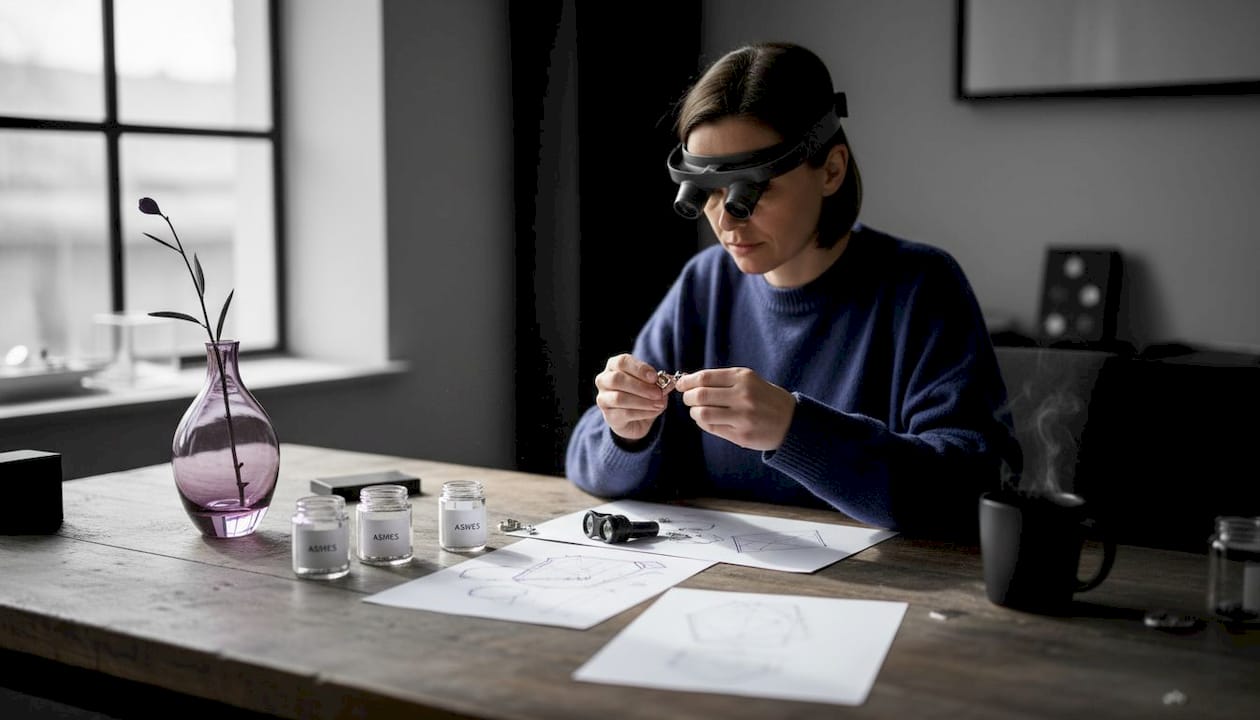
Most people hear “keepsake jewelry” and picture a small pendant holding a pinch of cremated remains. That picture is incomplete. Today’s keepsake jewelry spans DNA-infused diamonds, engraved heirloom lockets, fingerprint pendants, and celebratory pieces marking IVF milestones or a beloved pet’s memory. For affluent buyers who value artistry and permanence over sentiment alone, the category has quietly become one of the most meaningful investments in fine jewelry. This article clarifies what keepsake jewelry really is, how it is made, why demand is accelerating, and how to choose a piece you will pass down for generations.
Table of Contents
Key Takeaways
Point | Details |
Keepsake jewelry is versatile | It can include ashes, hair, DNA, engravings, and other personal inclusions—not just cremation pieces. |
Luxury buyers shape trends | Affluent clients prefer subtle, artistic, heirloom-quality keepsake jewelry that blends remembrance and celebration. |
Technical details matter | Mixed inclusions and overfilling compartments are common pitfalls; each method requires expert processing. |
Market is booming | The global keepsake jewelry market is rapidly growing, especially in North America, with demand for bespoke options increasing. |
Emotional impact is key | Keepsake jewelry offers not just memorialization but also meaning, legacy, and emotional healing for individuals and families. |
Defining keepsake jewelry: Beyond ashes and mourning
The phrase “keepsake jewelry” carries more emotional weight than most categories in fine jewelry, but it is often boxed into a single association with cremation. That narrow framing misses the full picture. Memorial jewelry types range from traditional lockets and engraved gemstones to biologically infused designs that incorporate DNA, hair, or even a few cells from a living person.
“Keepsake jewelry broadly encompasses non-ashes personalizations and appeals to affluent clients seeking heirloom-quality pieces that blend grief with celebration.”
What separates true keepsake jewelry from decorative jewelry is the emotional contract it carries. Every piece is intended to hold a story, a relationship, or a moment in a form that outlasts memory. That story might be grief, but it might equally be joy. Consider what the category actually covers:
Lockets and compartment pieces that hold photographs, locks of hair, or pressed flowers
Engraved gemstone rings carrying a fingerprint, handwriting, or a significant date in the metal or stone surface
DNA-infused diamonds created by extracting genetic material from hair or nails and pressing it into a finished gem
Fingerprint pendants cast or laser-etched from an actual print taken from a loved one
IVF milestone pieces marking the birth of a child conceived through assisted reproduction, often incorporating the embryo transfer date
Pet memorial jewelry using fur, whiskers, or paw prints to honor an animal companion
This spectrum explains why the most discerning buyers are not shopping for mourning artifacts. They are investing in wearable archives of lives fully lived. The emotional register here blends grief with celebration, loss with legacy, and the personal with the permanent.
Materials and methods: What goes into bespoke keepsake jewelry
Understanding the materials separating a generic pendant from a truly bespoke piece is essential before making any purchasing decision. The artisans and labs working at the luxury end of this market use an array of techniques, and each method carries its own technical requirements and limitations.
Inclusion type | Method | Durability | Privacy consideration |
Cremated ashes | Compressed into resin or glass; fused into diamond | Very high | Requires sending ashes to maker |
Hair or nail DNA | DNA extracted, infused into lab-grown diamond | Exceptional | Can be self-submitted at studio |
Fingerprint | Laser engraving or cast impression in metal | High | Requires print submission |
Fur or whiskers | Resin encapsulation or weaving into metalwork | Moderate | Usually self-submit |
Handwriting | Photo-etching into gold or platinum surface | High | Digital file submission |
The most technically advanced method is the DNA diamond process. Hair or nail clippings are submitted to a lab where DNA is extracted and incorporated into the diamond growth process. The result is a certifiable, faceted diamond that carries the genetic signature of the person being memorialized. At Shineternity, this entire process takes about two hours, which is remarkably fast compared to the weeks-long processes used by many competitors.
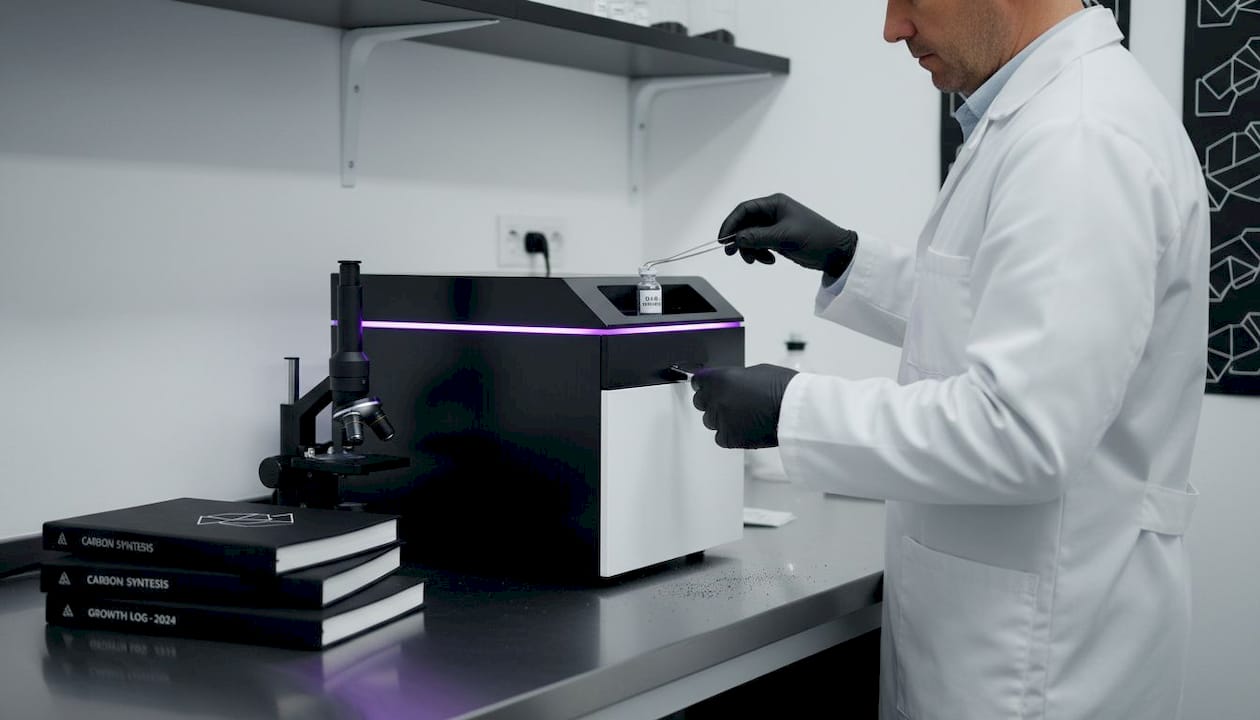
For engraved or compartment-style pieces, memorial gems explained in detail reveal why technical execution matters so much. Fingerprint replication, for instance, depends entirely on the quality of the original print submission. A blurry or smudged impression will produce a shallow or unclear engraving. Overfilling a compartment locket with too much ash or hair will compromise the seal, potentially causing the compartment to fail over time.
Handling mixed inclusions such as ashes combined with hair or placenta requires separate processing steps because the materials behave differently under heat and compression. A skilled artisan will process each inclusion type individually before combining them in the final setting.
Here is a simplified numbered sequence showing how a high-end keepsake piece is typically produced:
Consultation with an artisan or lab specialist to determine inclusion type, metal, and stone preferences
Submission of biological material (hair, nails, ashes, print) following privacy-protective packaging protocols
Processing of the inclusion material, whether that is DNA extraction, ash refinement, or print digitizing
Creation of the core element, whether a lab-grown diamond, resin gem, or engraved component
Setting and finishing in the chosen metal, with quality inspection of seals, engravings, and surface work
Delivery with certification and care documentation
Pro Tip: If privacy is a concern, look for studios that allow in-person or local drop-off of biological materials rather than requiring international shipping. This eliminates customs delays and reduces the risk of material loss in transit.
A useful DNA diamond guide walks buyers through the science behind how genetic material survives the diamond growth process and what to realistically expect from the finished stone’s appearance.
Market trends: Keepsake jewelry’s growing demand and evolving forms
The numbers behind this category are striking. The global cremation jewelry market was valued at $528 million in 2025, with pendants alone accounting for 60% of that share. The market is projected to grow at a compound annual growth rate of 6.65%, reaching $829 million by 2032. North America holds the largest regional share at 42%, driven in part by rising cremation adoption.
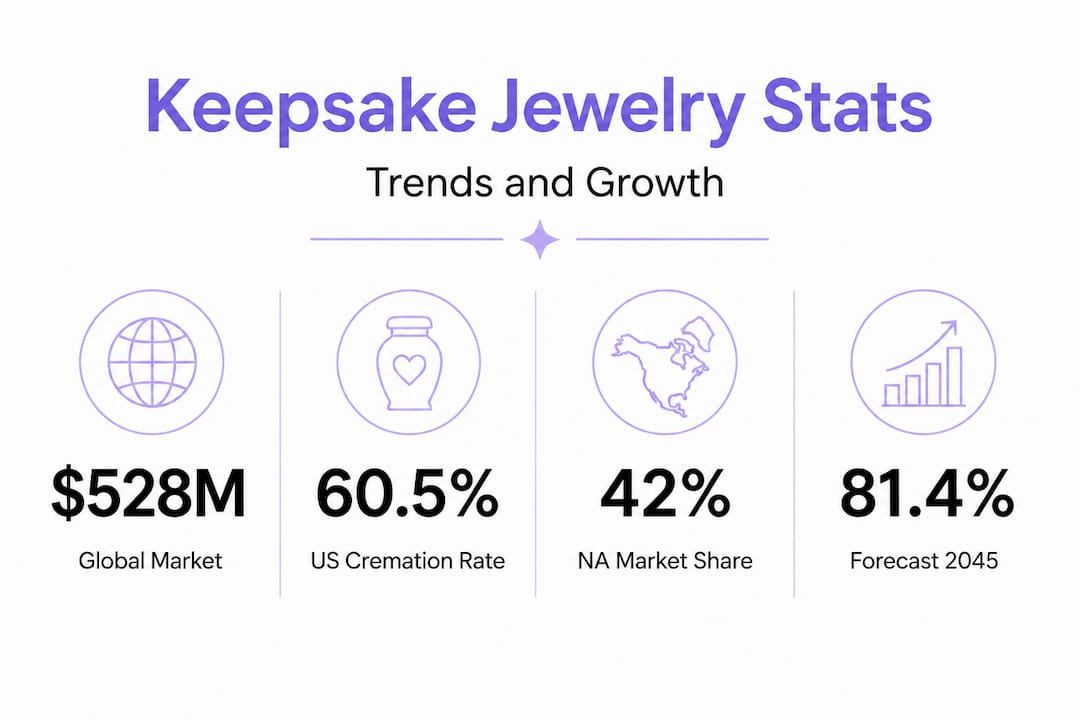
The US cremation rate stood at 60.5% in 2023 and is forecast to climb to 81.4% by 2045. That shift in end-of-life preference directly correlates with memorial jewelry demand, since families choosing cremation are more likely to seek wearable ways to preserve their loved one’s memory.
Year | US cremation rate | Global market value |
2023 | 60.5% | Approx. $495M |
2025 | Est. 63% | $528M |
2032 | Projected 74%+ | $829M |
2045 | Projected 81.4% | Beyond $1B |
Yet the most interesting market shift is not about death rates at all. It is about expansion. The category is growing because buyers are using keepsake jewelry for events that have nothing to do with mourning. Preserving loved ones through jewelry now includes:
Birth and new parent pieces incorporating a newborn’s footprint or umbilical cord
Pet memorial designs for owners who consider their animals family members
IVF and fertility journey markers capturing dates, embryo counts, or transfer milestones
Wedding anniversary upgrades that incorporate DNA from both partners into a shared stone
Celebration of life pieces commissioned before death, while the person being honored can still participate in the design
This evolution reflects a broader cultural shift. Affluent consumers are increasingly drawn to objects that carry verifiable authenticity. A diamond grown from your mother’s DNA is not a symbol. It is her, in a literal and scientifically traceable sense.
The stepwise diamond creation process used in memorial gem labs demonstrates how far the industry has moved from the days of simple engraved lockets. The technology now allows for customization at a molecular level, which is exactly what the luxury market demands.
Choosing the right keepsake: Affluent preferences and practical guidance
Knowing the options is one thing. Choosing the right piece for your specific situation requires a more deliberate approach. Luxury buyers often underestimate the practical considerations that separate a satisfying experience from a disappointing one.
Start with the inclusion type. Ask yourself what you want the piece to contain versus what you want it to represent. A fingerprint pendant represents touch and presence. A DNA diamond actually contains the person’s genetic material. These are emotionally distinct experiences, and your answer will guide every other decision.
Pet memorial jewelry can incorporate fur, whiskers, or teeth, and the submission process matters enormously here. Some studios ask you to send materials by mail, which raises questions about chain of custody and the possibility of loss. Other studios offer self-fill kits that allow you to prepare and seal the materials yourself before sending a completed cartridge, which protects both privacy and peace of mind.
Key questions to ask any artisan or studio before committing:
What happens to unused biological material after the piece is completed? Will it be returned, stored, or destroyed?
What is the compartment capacity for locket or resin pieces, and what are the consequences of overfilling?
What certifications accompany a DNA diamond, and does a third-party gemological lab verify the stone?
Can the design be replicated if the piece is lost or damaged, and what records are kept?
What is the timeline, and are there rush options if the piece is needed for a service or memorial event?
Pro Tip: Request a physical sample of the artisan’s previous work before committing to a DNA diamond or fingerprint piece. High-resolution photographs do not capture the tactile quality, color depth, or setting craftsmanship that you will experience in person.
The most common mistake affluent buyers make is prioritizing aesthetics over process. A beautifully designed pendant that arrives with a poor-quality fingerprint engraving or a compromised seal is a permanent disappointment. Focus first on the studio’s technical reputation, then let design follow.
For inspiration, custom diamond designs show how memorial pieces can look entirely contemporary and wearable rather than overtly sentimental. The goal is a piece you actually wear, not one you keep in a drawer because it feels too heavy to put on.
The emotional power of memorial diamonds also matters in practical terms. Research into how objects carry emotional meaning suggests that physical connection to a lost person through a tangible, wearable object can meaningfully support the grief process over the long term.
Why keepsake jewelry transcends simple memorials
Most articles in this space stop at the technical and the practical. Here is what they miss: keepsake jewelry’s deepest value is not commemorative. It is generative. It creates something new from loss.
There is a conventional wisdom in the grief space that objects help people hold on. That framing, while kind, undersells what a masterfully made keepsake piece actually does. The most meaningful pieces we have encountered do not hold the wearer back. They carry the wearer forward. A grandmother’s DNA diamond worn to a grandchild’s graduation is not about clinging to the past. It is about threading a life into a future that person never got to see.
Keepsake jewelry appeals to affluent clients precisely because it is subtle, layered, and emotionally honest rather than performative. The luxury market has always been driven by objects that tell a private story in a public way. A diamond that carries your father’s DNA tells no one anything unless you choose to share it. That discretion is not a secondary feature. For many buyers, it is the entire point.
The industry often overlooks how much value luxury clients place on the making of these pieces. The ritual of gathering the hair, submitting the material, choosing the setting, and receiving the finished stone is itself a form of closure. It is a structured, intentional act of honoring someone. That process matters as much as the object it produces.
We also see a growing number of clients commissioning memorial diamond perspectives for living people, capturing a parent’s DNA while they are still alive, a spouse’s fingerprint to mark a major anniversary, a child’s first baby hair. These celebratory pieces are not about grief at all. They are investments in a story that is still being written.
The science and emotion of gems intersect in keepsake jewelry more powerfully than in almost any other category of fine jewelry. When the object you wear every day carries a verifiable, molecular connection to someone you love, the line between jewelry and legacy disappears entirely.
Explore custom keepsake jewelry solutions
If this article has shifted how you think about what a keepsake piece can be, the next step is exploring what is possible for your specific situation.
Shineternity specializes in infusing DNA extracted from hair or nails directly into a finished diamond, with the entire process completed in just two hours. Whether you are honoring someone who has passed or creating a celebratory piece for someone very much alive, the options are extraordinary. Explore the Memorial Brilliance Diamond and the Shine of Remembrance Diamond to see how science and artistry come together in a single, wearable gem. For fully custom settings and bespoke design consultation, our jewelry design service walks you through every decision from inclusion type to final setting.
Frequently asked questions
What types of keepsake jewelry can be created aside from ash-based pieces?
Keepsake jewelry includes lockets, engravings, DNA-infused diamonds, and pieces incorporating hair, fur, fingerprints, or handwriting, covering a much wider range than cremation-based personalizations alone.
How are multi-inclusion keepsake jewelry pieces made?
Mixed inclusions such as ashes and hair require separate processing steps because different materials behave differently under heat and compression, which protects seal integrity and final quality.
Is keepsake jewelry popular in the United States?
Yes. North America holds a 42% global market share in cremation jewelry, and US cremation rates are expected to reach 81.4% by 2045, making demand for memorial pieces one of the fastest-growing segments in fine jewelry.
What are the risks or challenges with keepsake jewelry?
The main risks include overfilling compartments, which can cause seal failure, poor-quality print submissions that result in unclear engravings, and privacy concerns when shipping biological materials to artisans you have not vetted in person.
Recommended
Comments