How diamond creation from DNA turns memories into gems

A diamond can be physically created from the DNA, hair, or ashes of someone you love. That’s not a marketing claim; it’s a real, documented process used by labs around the world to produce genuine gemstones from biological material. Yet most people still assume all diamonds come from the earth. The truth is far more personal than that. This guide walks you through exactly how memorial diamonds are made, what the science actually proves, where the real debate lives, and how you can make an informed decision before ordering one for someone you’ve lost.
Table of Contents
Step-by-step: How diamonds are created from DNA, hair, or ashes
Authenticity, symbolism, and controversy: What you really get
From lab to jewelry: What to expect when ordering a memorial diamond
The truth most guides miss: Why memorial diamonds are more than science
Commemorate your loved one with a custom diamond from Shinlabz
Key Takeaways
Point | Details |
Memorial diamonds defined | Diamonds can be lab-created from DNA, ashes, or hair to honor loved ones and pets. |
Reliable creation process | Transformation requires specific amounts of material and uses advanced lab methods for real diamonds. |
Scientific and symbolic value | Memorial diamonds are scientifically genuine, but much of their meaning is deeply emotional and symbolic. |
Important selection tips | Choose transparent providers and understand lab certifications and supplementation practices. |
Ordering is possible | You can create and personalize a unique jewelry piece that holds cherished memories with the right provider. |
What is diamond creation? Memorial diamonds explained
When most people hear “diamond creation,” they picture massive industrial machines pressing carbon at extreme temperatures. For memorial diamonds, the idea is the same, but the carbon source is what makes it extraordinary. Diamond creation in this context refers to making lab-grown memorial diamonds from biological materials like hair, ashes, or DNA-containing samples to commemorate loved ones.
These are not simulated diamonds or cubic zirconia. They are real diamonds, grown under real conditions, from real material with a connection to a real person or pet. If you want a deeper look at how biology and gemology intersect, this DNA diamond guide covers the full picture of how personal genetic material gets translated into a lasting gem.
“A memorial diamond isn’t a replica of a person. It’s a physical continuation of them, grown from the same carbon that once made them alive.”
Here’s what memorial diamonds typically come from:
Hair (the most common DNA source, requiring about 3.5 oz)
Cremated ashes (roughly 2 oz or half a cup)
Blood or tissue samples (less common but possible)
Pet ashes or fur (the same process applies entirely to animals)
People choose memorial diamonds for a wide range of reasons. Some want a wearable tribute that travels with them. Others find traditional burial or urn storage too distant. A growing number of pet owners want to honor animals who were family. The symbolism of something eternal, something as hard and enduring as a diamond, carries real emotional weight. And science shows that diamonds hold memories in ways that go beyond the sentimental.
One common misconception is that the diamond is “fake” because it’s lab-grown. Lab-grown simply means the conditions of natural diamond formation were replicated in a controlled environment. The crystal structure, hardness, and optical properties are identical to mined diamonds. The only difference is where growth happened.
Another misconception is that a DNA diamond contains readable genetic information. It does not. DNA is destroyed in the carbon extraction process. What remains is the carbon itself, which becomes the raw material for the gem. The connection is physical and symbolic, not biological in the genetic sense.
Step-by-step: How diamonds are created from DNA, hair, or ashes
Now that you know what a memorial diamond is, here’s how the full transformation happens, step by step.
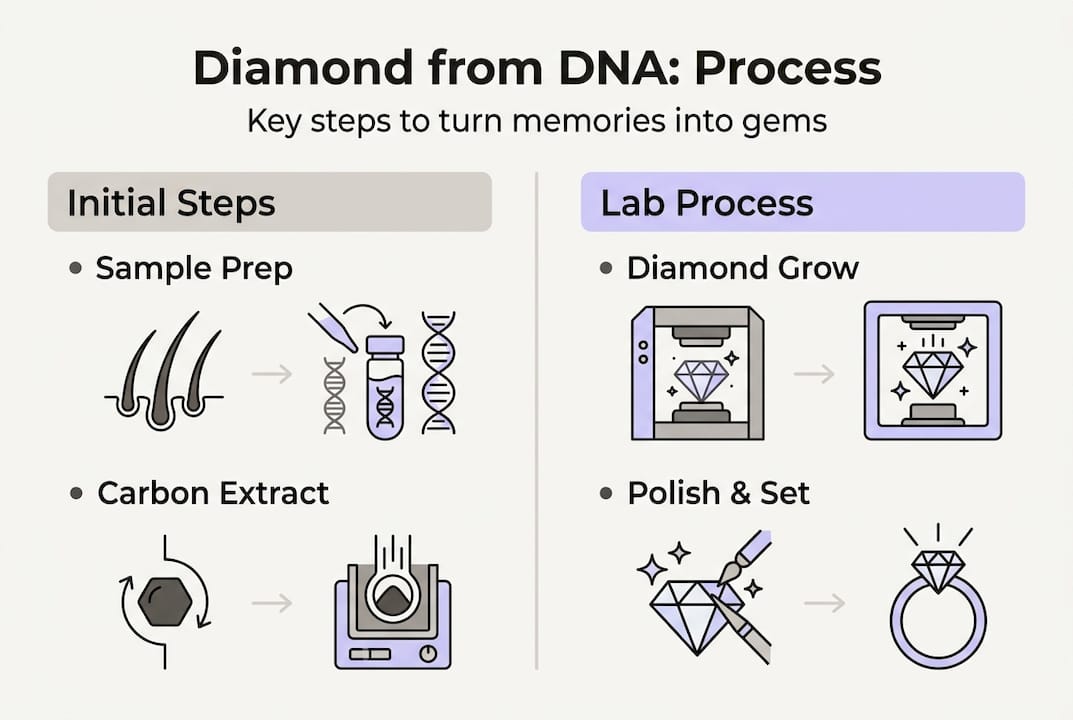
The stepwise diamond creation process is surprisingly methodical. Labs follow a precise sequence to take biological material and convert it into a gemstone that meets grading standards.
Material submission. You send hair, ashes, or another approved biological sample to the lab. Minimum amounts apply: ~3.5 oz of hair or ~2 oz of ashes are the standard requirements for one diamond.
Carbon extraction. The lab removes carbon from your biological material through thermal or chemical treatment.
Purification. Raw extracted carbon is refined into high-purity graphite, which is the form needed for diamond growth.
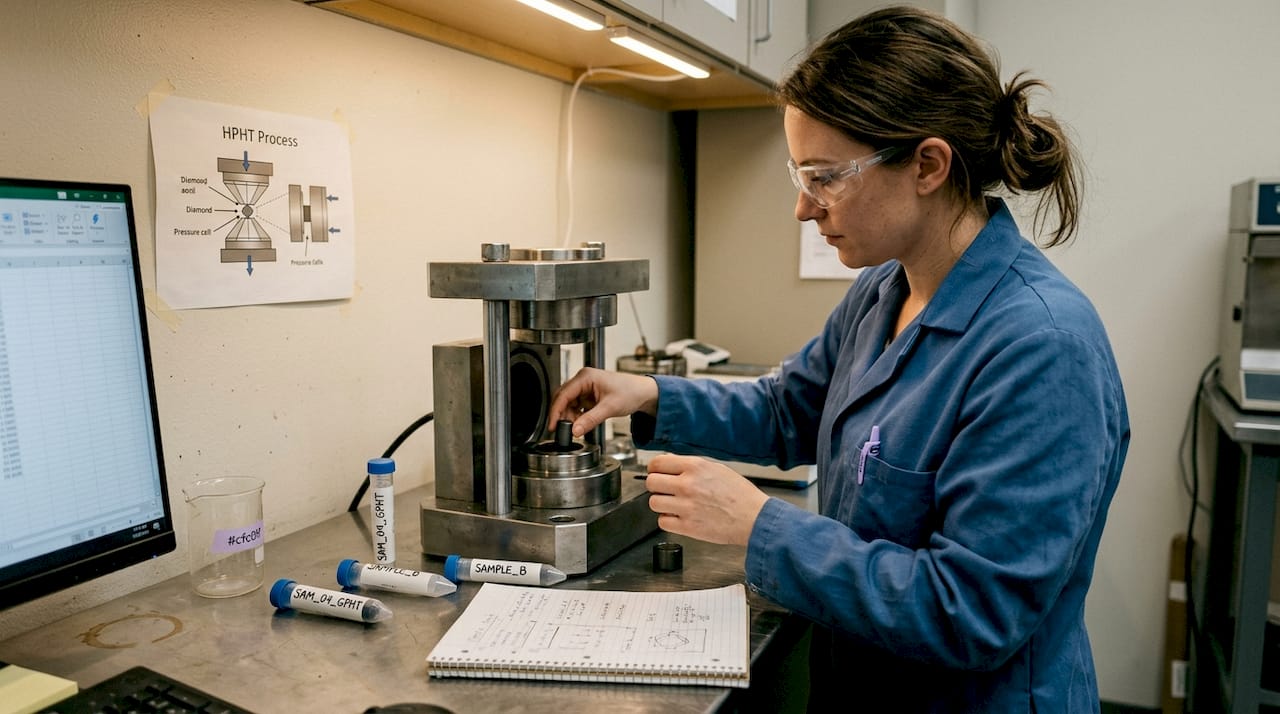
Diamond synthesis. The purified graphite is placed into a growth chamber using the HPHT (high pressure, high temperature) process, mimicking conditions deep in the earth.
Growth period. The diamond grows over several months. Timelines range from 4 to 8 months typically, and up to 11 months for larger stones.
Cutting and setting. Once grown, the rough diamond is cut, polished, certified, and set into the jewelry you choose.
Stage | What happens | Time required |
Carbon extraction | Biological material processed | 1 to 2 weeks |
Purification | Carbon refined to graphite | 1 to 2 weeks |
HPHT growth | Diamond crystal forms | 3 to 9 months |
Cutting and polish | Rough stone shaped | 2 to 4 weeks |
Certification | Grading and documentation | 1 to 2 weeks |
The Eternal Diamond process follows a similar structure, and most reputable labs use HPHT as their primary method. CVD (chemical vapor deposition) is occasionally used for DNA infusion techniques but is less common for full memorial diamond creation.
Pro Tip: Before you submit material, request the lab’s minimum submission quantities in writing. Some labs quietly require more material than advertised to guarantee a successful grow.
Use this diamond tribute checklist to prepare before you ship any biological material.
HPHT vs. CVD: Methods for memorial diamond creation
As you consider the science, it helps to compare the two main methods used by diamond labs.
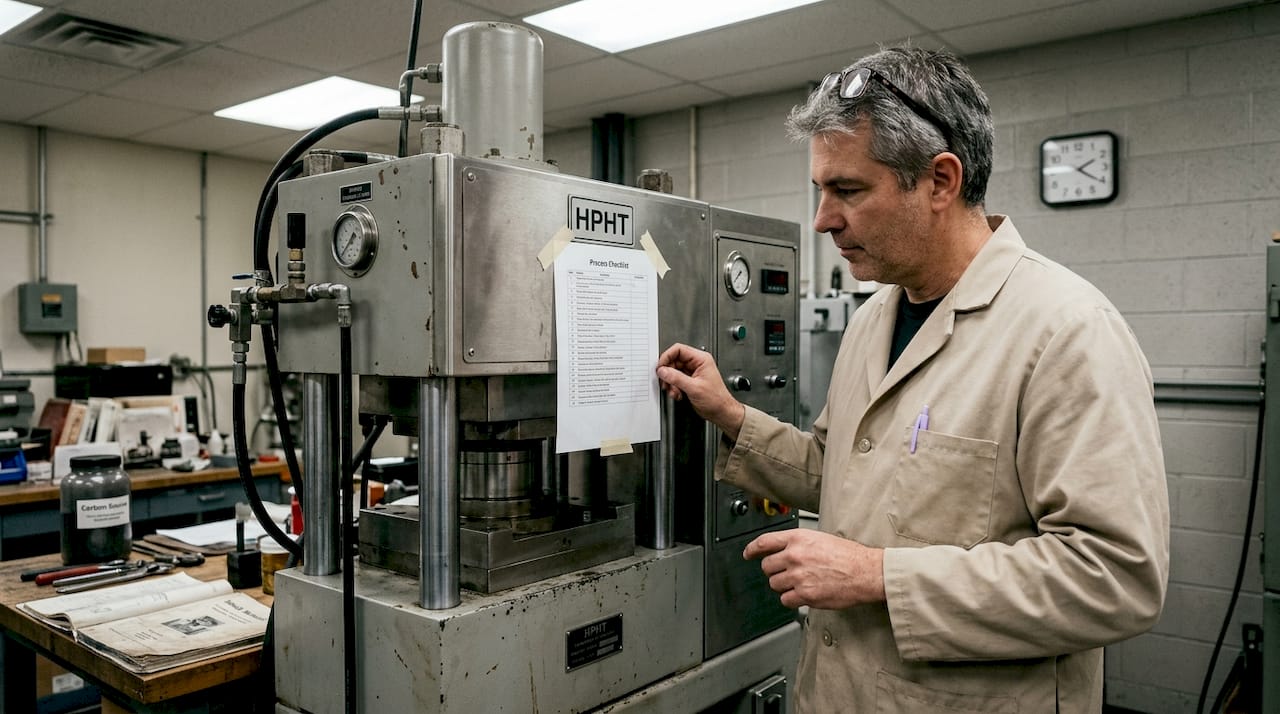
HPHT stands for high pressure, high temperature. It’s the closest replication of how diamonds form naturally deep in the earth’s mantle. A seed crystal is placed with graphite under pressures above 1.5 million PSI and temperatures exceeding 1,400°C. The graphite dissolves into the seed and crystallizes as diamond over months. This is the standard method for bespoke DNA diamonds and most memorial gems.
CVD stands for chemical vapor deposition. In this method, carbon-rich gas is pumped into a chamber where it breaks down and deposits carbon atom by atom onto a substrate, slowly building a diamond layer by layer. It’s more commonly used in industrial and tech applications but plays a supporting role in some memorial diamond marketing, particularly for DNA “infusion” claims.
HPHT remains the primary method for memorial diamonds because it allows direct graphite-to-diamond conversion, meaning the carbon from your loved one’s remains can be incorporated into the growth process directly.
Factor | HPHT | CVD |
Pressure required | Extremely high | Low to moderate |
Temperature | 1,400°C+ | 700 to 1,200°C |
Typical use | Memorial and gem diamonds | Industrial, tech, infusion |
Carbon source integration | Direct | Indirect or trace |
Cost | Moderate to high | Variable |
Timeline | 4 to 11 months | Weeks to months |
The technology at Saint Diamonds shows how HPHT is applied in a memorial context, with rigorous process controls to maintain consistency. For most families ordering a memorial gem, HPHT is the method you want, because it’s the most established, the most studied, and the most directly connected to the biological source material you provide.
Authenticity, symbolism, and controversy: What you really get
Understanding the lab process brings up important questions about value, meaning, and truth in the finished diamond.
Here’s the honest reality: the diamonds are chemically and physically real. Gem labs like IGI and GIA can certify them as lab-grown diamonds. What they cannot certify is the carbon source. No current grading technology can trace whether the carbon in your diamond came from your loved one’s ashes or from a commercial carbon supply.
That’s where the controversy around memorial diamonds enters the picture.
“Critics argue cremation destroys nearly all carbon. Several patents in the memorial diamond space openly admit that supplementation of the carbon source is required to complete the growing process.”
This isn’t necessarily fraud, but it is a gap between marketing language and verifiable fact. Patents confirm supplementation is needed, and no empirical benchmarks exist for what percentage of the finished diamond actually comes from the original biological material.
Key points to keep in mind:
The diamond is physically real, not a simulation
The emotional symbolism is entirely valid and meaningful
No lab can verify the carbon source of any memorial diamond
Supplementation of source carbon is standard practice, not an anomaly
Providers who are transparent about this deserve more trust
For custom diamond inspiration that acknowledges this balance, look for providers who explain supplementation openly rather than hiding it in fine print.
Pro Tip: Ask any provider directly whether they supplement carbon during the growth process. A trustworthy lab will answer clearly and without hesitation.
From lab to jewelry: What to expect when ordering a memorial diamond
If you’re thinking of ordering a memory diamond, here’s how the process unfolds from lab to finished jewelry.
Consultation and order. You select your diamond size, shape, and setting preferences. Most providers offer color options from near-colorless to blue or yellow, depending on trace elements used.
Material shipment. You mail your biological sample using a prepaid, trackable shipping kit provided by the lab.
Processing and growth. Carbon extraction and HPHT growth begin. This phase takes the longest and is where most of the waiting happens.
Post-growth finishing. Diamonds are cut, polished, and certified by a recognized gem lab like IGI or GIA as lab-grown stones.
Delivery and setting. The finished diamond is set into your chosen jewelry piece and shipped back to you with full documentation.
Color is one of the most personal choices in this process. Pure carbon diamonds grow colorless. Blue hues come from boron. Yellow comes from nitrogen. Some labs offer red or black options through additional treatments. Each color carries different emotional resonance for different families.
Expect regular updates from reputable providers throughout the growth period. Good labs communicate at each stage, not just at the start and end. If a provider goes silent for months without contact, that’s a red flag.
For a full look at your personalized DNA diamond options, reviewing settings, carat sizes, and color choices before ordering saves time and ensures the final piece matches your vision. Also check the cremation diamond guidance from grief professionals to prepare emotionally for the process.
Pro Tip: Keep copies of all paperwork your lab sends, including chain-of-custody forms and carbon extraction reports. This documentation matters if you ever want to resell or insure the diamond.
The truth most guides miss: Why memorial diamonds are more than science
Most guides stop at the chemistry. They explain HPHT, list the required ounces of ash, and summarize the timeline. What they rarely address is the deeper question: what is the diamond actually doing for you?
The science will always have limits. You cannot prove that every atom in that diamond was once part of your loved one. But you can hold something beautiful, permanent, and intentionally created from a part of them. That act of creation matters. Grief researchers have long noted that physical objects anchored to memory accelerate the process of integrating loss into everyday life.
We believe the real value of a memorial diamond isn’t in the carbon percentage. It’s in the intention behind it. The ritual of collecting the material, sending it away, waiting for it to grow, and wearing it. That process is a form of honoring that most keepsakes cannot offer.
Choosing a transparent provider is the most practical expression of that intention. If you’re honoring loved ones with ashes diamonds, the process itself becomes part of the tribute. Be honest with yourself about what you’re buying: a real diamond, a symbolic connection, and a story only you can tell.
Commemorate your loved one with a custom diamond from Shinlabz
Shinlabz specializes in creating memorial diamonds that are as personal as the memories behind them. Using DNA extracted from hair or nails, the entire infusion process takes just 2 hours, making it one of the fastest and most transparent options available.
From the initial consultation to final delivery, Shinlabz guides you through every decision with full transparency. You can explore the immortalize diamond service to see how your biological material becomes a finished gem, browse custom jewelry design for setting options that reflect your loved one’s style, or view the full range of remembrance diamond options available. Every piece is made to carry a story that lasts forever.
Frequently asked questions
How much material do I need to create a memorial diamond?
You typically need about 2 oz of ashes or 3.5 oz of hair for a single memorial diamond. Some providers may request slightly more to guarantee a successful carbon extraction.
Are diamonds from ashes or DNA chemically real diamonds?
Yes, these are physically and chemically identical to mined diamonds in every measurable way. Gem labs certify them as lab-grown stones, not as diamonds of a verified biological origin.
How long does it take to make a memorial diamond?
The process typically takes between 4 and 8 months from material receipt to delivery, though some diamonds take up to 11 months depending on size and growth conditions.
Can you verify that the diamond comes only from my loved one’s ashes?
No lab can currently confirm the carbon source of a finished diamond. Supplementation is required in the growth process, and no standardized test exists to measure what percentage came from the original biological material.
Are memorial diamonds available for pets as well?
Yes. You can create a memorial diamond from pet ashes or fur using the same HPHT process. Many families choose this option to honor dogs, cats, and other animals who were central to their lives.
Recommended
Comments