Defining Personal Diamonds: DNA Turned Into Lasting Memorials

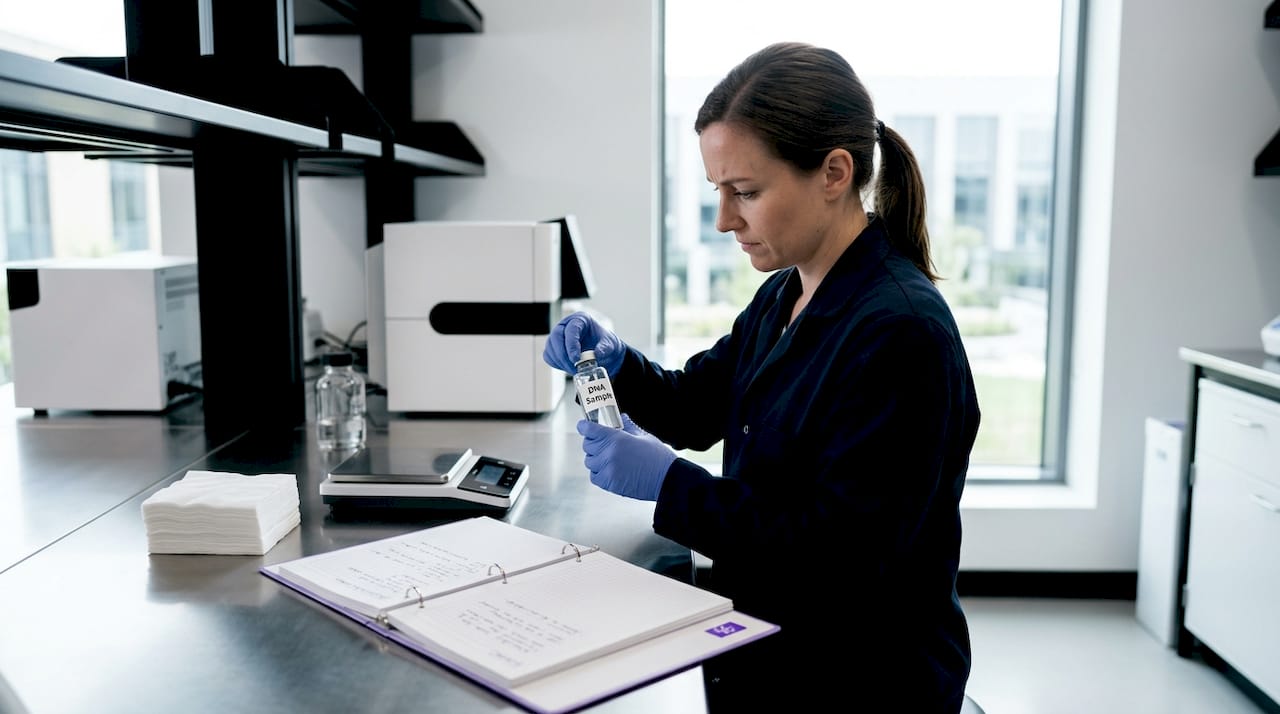
The assumption that a diamond’s worth lives entirely in its geological age or market price is about to be challenged. Genuine, gem-quality diamonds can now be grown directly from a loved one’s hair or ashes, forging a connection between science and legacy that no jeweler’s showcase has traditionally offered. This article walks you through exactly what personal diamonds are, how they are made, what they cost, and why they represent a fundamentally different kind of luxury for those who are serious about leaving something meaningful behind.
Table of Contents
Key Takeaways
Point | Details |
Personal diamond definition | A personal diamond uses your DNA or loved one’s remains to create a custom, memorial gemstone. |
Creation process | The process uses advanced lab methods, taking 4-11 months from start to finish. |
Certification and authenticity | Memorial diamonds receive lab certification but can’t be gemologically distinguished from other lab-grown diamonds. |
Pricing and value | Prices start around $1,599, with value centered on personal meaning rather than investment. |
True luxury | Personal diamonds provide unique emotional legacy rather than simply market-driven exclusivity. |
What are personal diamonds?
Personal diamonds sit at the intersection of biotechnology and bespoke luxury. They are not imitations, simulants, or mass-produced lab stones. Personal diamonds, also known as memorial or DNA-infused diamonds, are lab-grown diamonds created from carbon extracted from human hair, cremated ashes, or other biological materials, transforming personal remains into genuine diamonds for memorial jewelry. Every facet carries a story that belongs to one person, and only one person, in the world.
What separates a personal diamond from a standard lab-grown stone comes down to origin. Conventional lab diamonds start with generic graphite or methane gas. A personal diamond begins with you or someone you love. The carbon source is biological, intentional, and irreplaceable. That distinction matters enormously to collectors and families who want legacy embedded in physical form rather than locked inside a digital archive.
High-net-worth individuals are increasingly drawn to personal diamonds for three distinct reasons:
Legacy: A gem grown from a parent’s hair or a child’s first lock becomes a wearable family heirloom that cannot be replicated.
Privacy: The process is discreet. Collection kits arrive at your home, and the diamond is grown with a strict one-donor chain of custody.
Personalized luxury: Every variable, from color to cut to setting, reflects the individual rather than a market trend.
“A personal diamond is not purchased. It is grown from something irreplaceable, which makes its value fundamentally non-negotiable on any secondary market.”
If you want a broader foundation before diving deeper, this DNA diamond guide covers the core concepts clearly. For a narrative-driven look at the transformation itself, the story of going from DNA to diamond captures how science converts memory into a physical gem.
How personal diamonds are made: Science and steps
The process sounds almost implausible until you see the chemistry behind it. Hair, ashes, or nail clippings contain carbon. Carbon, under the right conditions, forms diamond. That is the elegant truth at the core of every memorial diamond.
Here is how the process unfolds, step by step:
Sample collection. You send hair clippings, cremated ashes, or another approved biological material using a secure, discreet collection kit.
Purification. The biological material is chemically and mechanically processed to isolate pure carbon, refined to 99.99% graphite through rigorous purification.
Crystal growth using HPHT. The purified graphite is placed in a growth cell and subjected to approximately 60,000 atmospheres of pressure at temperatures between 1,400°C and 2,000°C. Over six to twelve weeks, a diamond crystal lattice forms.
Optional CVD method. Some providers use Chemical Vapor Deposition, where carbon gases are deposited in plasma layers. HPHT is dominant for memorial diamonds because it directly converts graphite, making it ideal for ashes and hair. CVD offers high purity but is less commonly used for this application.
Cutting and polishing. Once the rough crystal forms, master cutters shape it into your selected cut, whether round brilliant, cushion, oval, or another style.
Certification. The finished stone is sent for independent grading and returned with documentation.
One nuance deserves clarity: DNA itself contributes trace carbon symbolically. The purification process necessary to create diamond-grade graphite destroys the DNA structure. This is not a flaw. It is a requirement of the chemistry. What you receive is a diamond grown from the same physical matter as your loved one, which is a profound biological and emotional truth, even if no DNA strand survives intact.
Feature | HPHT method | CVD method |
Primary application | Memorial diamonds from hair/ashes | High-purity lab diamonds |
Growth environment | 60,000 atm, 1,400–2,000°C | Plasma gas deposition chamber |
Typical growth time | 6–12 weeks | 4–8 weeks |
Color control | Limited (yellow/blue natural) | High (wide color range) |
Best sample type | Hair, ashes, graphite | Purified carbon gas |
Individual donor isolation | Yes | Yes |
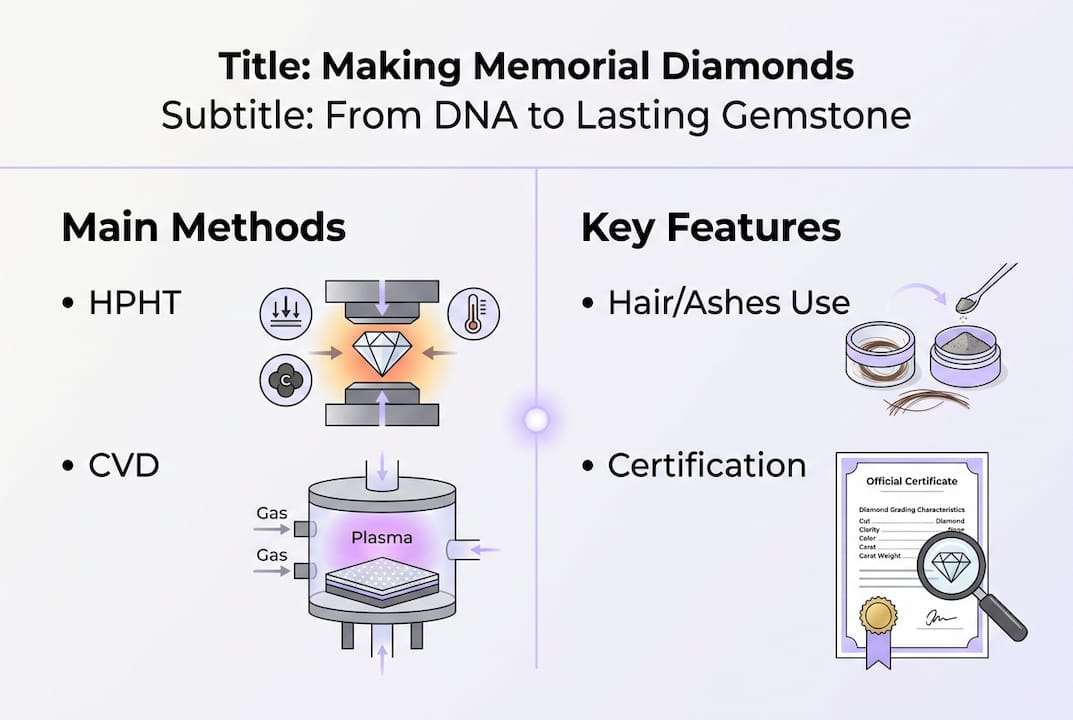
Pro Tip: Always send more sample than the minimum required. Providers typically ask for 5–10 grams of hair or 50–100 grams of ashes, but having a surplus ensures the lab has enough carbon to reach your desired carat weight without compromise. You can follow the complete stepwise creation process to prepare your submission with confidence.
Timeline, certification, and customization options
Patience is part of the process. Unlike purchasing a loose diamond from a jeweler’s inventory, a personal diamond cannot be rushed without compromising quality. The full process takes 4 to 11 months, covering collection, purification (three to nine weeks), growth (several months), cutting and polishing (two to six weeks), and final certification.

That range is wide for good reason. Smaller carat weights and simpler colors move faster. A 0.5ct yellow diamond will typically arrive sooner than a 1.0ct blue stone requiring more precise chemical control during growth. Seasonal demand at leading providers also influences timing.
Certification is the formal proof that your diamond meets gemological standards. Reputable providers submit finished stones to the Gemological Institute of America or the International Gemological Institute. GIA and IGI certify memorial diamonds as chemically and physically identical to natural diamonds. No standard instrument used in gemological testing can differentiate carbon derived from ashes versus geological sources. Providers also offer chain-of-custody documentation, optional DNA sample preservation, and laser inscription on the girdle of the stone with a memorial phrase or identification number.
Feature | Standard lab diamond | Memorial personal diamond |
Carbon source | Generic graphite or methane | Human hair, ashes, or biological material |
Timeline | Days to weeks | 4–11 months |
Certification | GIA, IGI, or IGI | GIA or IGI, plus chain-of-custody documentation |
Personalization | Cut, color, setting | Carbon source, color, cut, inscription, setting |
Emotional significance | Aesthetic | Biographical and sentimental |
Uniqueness | Commercially reproducible | Tied to one individual’s biological origin |
Color options for personal diamonds are particularly compelling for discerning buyers. Yellow and amber tones occur naturally when nitrogen is present during growth. Blue tones emerge when boron is introduced. Colorless stones require additional processing steps to remove nitrogen entirely. These colors are the result of precise chemical engineering during crystal growth, not the color of the hair or ashes submitted.
Key customization choices available to most clients:
Color: Yellow, blue, green, red, colorless, or orange, depending on the provider’s capabilities.
Carat weight: Typically ranges from 0.25ct to 1.0ct or more, based on available carbon and budget.
Cut: Round brilliant, princess, oval, cushion, radiant, and other certified cuts.
Setting: Solitaire rings, pendants, earrings, bracelets, or bespoke multi-stone pieces.
Inscription: A name, date, or personal message laser-etched on the girdle.
For creative direction, this collection of custom diamond inspiration shows how families have chosen to memorialize loved ones. And if you are considering personal diamonds as a statement of personalized luxury gifting, there are real design considerations worth exploring before you finalize a setting.
Pricing, value, and trade-offs: What’s the real investment?
Personal diamonds occupy a distinct pricing tier. They are more expensive than mass-market lab-grown diamonds because of the specialized process, individual handling, and certification requirements involved. Pricing starts around $1,599 to $3,499 for a 0.25 to 0.3ct yellow stone and can exceed $10,000 for a 1ct or larger colored diamond, depending on the provider, color intensity, and cut complexity.
Diamond size | Color | Estimated price range |
0.25–0.3ct | Yellow | $1,599–$3,499 |
0.5ct | Yellow or blue | $3,500–$6,000 |
1.0ct | Yellow | $8,000–$12,000 |
1.0ct | Blue (rare) | $10,000–$15,000+ |
1.5ct+ | Any | $15,000+ |
Note: Prices vary by provider, year, and customization level. Use these as directional benchmarks only.
The U.S. cremation rate now sits near 63%, a figure that helps explain why demand for memorial diamonds is growing steadily. Providers including Saint Diamonds, Eterneva, and Labrilliante have established mature operations with documented chain-of-custody standards, reflecting how serious this category has become.
Now for the trade-off that every sophisticated buyer should understand clearly. Lab-grown diamonds, including memorial stones, do not appreciate the way natural diamonds can. Natural diamonds derive their value partly from geological scarcity. Lab-grown diamonds can, in principle, be produced indefinitely, which exerts long-term downward pressure on resale prices. A personal diamond is not a financial asset in the traditional sense.
Key considerations before purchasing:
Do not buy a personal diamond expecting resale returns. The secondary market for memorial stones is extremely limited.
Do expect exceptional sentimental and biographical value. This is the purpose of the product, and it delivers.
Ethical appeal matters. No mining is involved, no conflict sourcing, and the carbon footprint of a lab-grown process is considerably lower than mining.
The diamond is certified. On every gemological standard, it is a real diamond, not a simulant.
Pro Tip: If a family member is skeptical about the investment, reframe the conversation around memorial jewelry diamonds rather than traditional jewelry. The question changes from “what is this worth?” to “what does this represent?” Those are fundamentally different conversations, and the second one is where personal diamonds win decisively.
A fresh perspective: Why memorial diamonds redefine luxury
Most luxury conversations center on scarcity, provenance, and market price. A Patek Philippe holds value. A rare colored natural diamond appreciates. These are legitimate arguments, and they have defined high-end purchasing for generations.
Personal diamonds make those arguments irrelevant. Not because they compete with them, but because they operate in an entirely different dimension of value. When someone holds a diamond grown from a parent’s hair, the question of resale value is almost offensive. The diamond carries memories converted into gems in a way that no geological process and no market fluctuation can replicate or diminish.
What the industry rarely discusses is the permanence angle. A photograph fades. A piece of clothing deteriorates. A journal gets lost. A diamond survives thousands of years under normal conditions. The same gem worn on your grandmother’s finger could theoretically be worn by your great-great-grandchild. The biographical DNA link, even if symbolically encoded rather than scientifically traceable in the final stone, anchors that continuity in a way that feels genuinely profound.
We also believe this category challenges something deeper about what luxury is supposed to mean. Conspicuous consumption, buying things to signal status, is losing its grip on high-net-worth buyers who have already acquired what signals say they should. The next frontier is intimacy. Bespoke. Irreproducible. Personal diamonds deliver exactly that. They cannot be bought in a store, cannot be worn by a stranger with similar taste, and cannot be compared to another person’s purchase. The individuality is structural, not cosmetic.
The sustainable angle reinforces this shift. A generation of luxury buyers increasingly wants their purchases to reflect personal ethics, not just personal taste. A memorial diamond made without mining, tied to a loved one’s biological legacy, accomplishes both. It is a singular object that says something true about who you are and who you came from.
Design your own luxury: Next steps for creating a personal diamond
If this conversation has moved from intellectual curiosity to genuine consideration, the next step is surprisingly straightforward.
At Shinlabz, we specialize in infusing DNA extracted from hair or nails directly into a finished diamond, and the entire in-studio process takes just two hours. Whether you are honoring a parent, preserving a piece of your own story, or crafting a one-of-a-kind gift for someone extraordinary, our custom jewelry design service walks you through every decision, from carbon source to final setting. Every diamond is grown individually, certified, and built around a single person’s legacy. When you are ready to begin, book a design consultation and speak directly with our team about what your personal diamond should look, feel, and mean.
Frequently asked questions
How much hair or ashes are needed to create a personal diamond?
Typically, 5 to 10 grams of hair or approximately 50 to 100 grams of cremated ashes (roughly half a cup) are required to provide sufficient carbon for one memorial diamond.
How long does it take to receive a memorial diamond?
The full process spans 4 to 11 months from the time your sample is received to final delivery, depending on carat size, color complexity, and provider workload.
Can you prove a diamond was created from a specific person’s DNA?
No standard gemological instrument can verify the carbon source of a finished diamond, but providers issue chain-of-custody documentation and can offer optional DNA sample preservation and laser inscription to establish provenance records.
Are DNA-infused diamonds a good investment?
Memorial diamonds are not designed for financial appreciation. Their value is biographical and sentimental. Lab-grown diamonds broadly face downward resale pressure compared to natural stones, so purchase decisions should be driven by legacy intent rather than market expectations.
Recommended
Comments